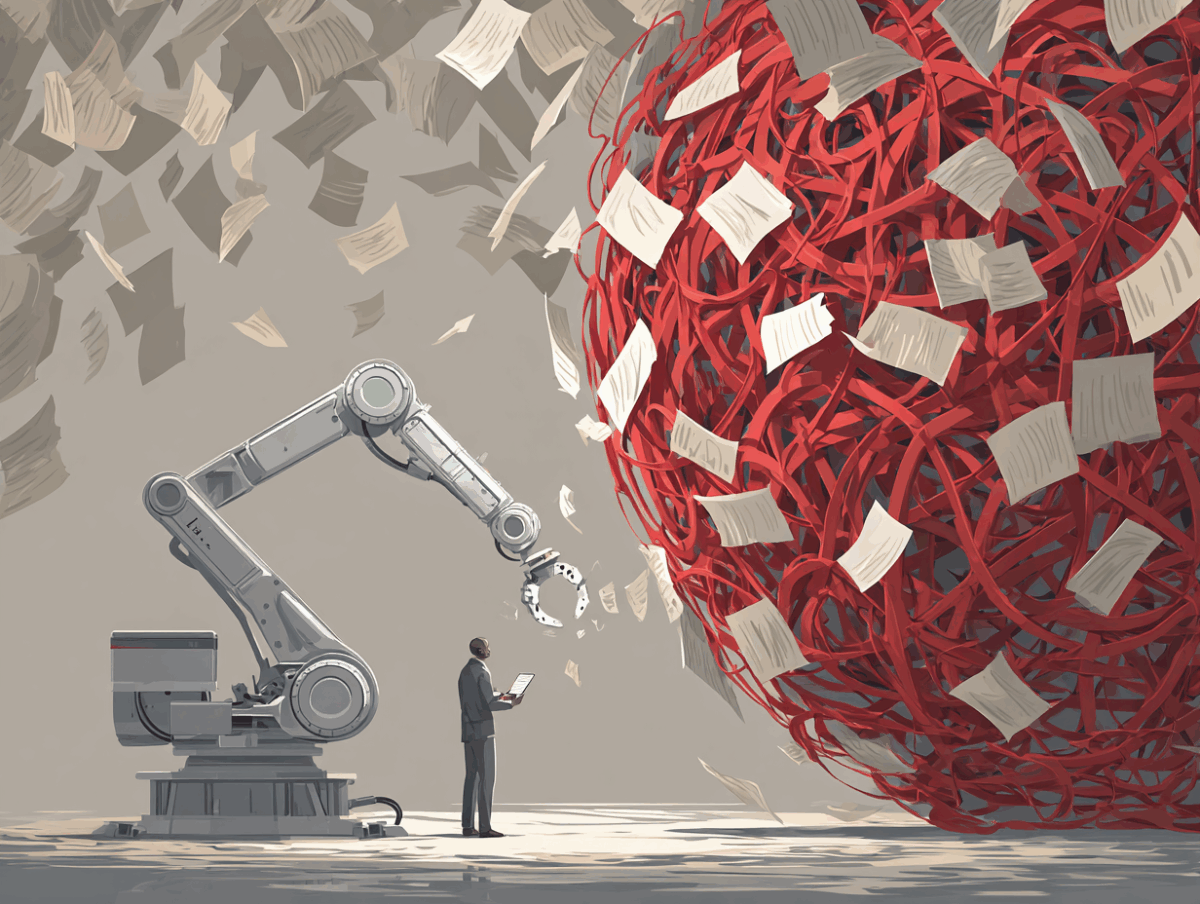
Why Predictive Maintenance Is Now a Supply Chain Strategy

For decades, maintenance and supply chain operated on parallel tracks—close enough to impact one another, but rarely integrated in any meaningful way. Today, that separation is no longer viable. In an environment defined by volatility, thin labor markets, aging assets, compressed planning cycles, and rising customer expectations, unplanned downtime has become one of the most significant sources of supply chain instability.

Predictive maintenance (PdM) is not simply a new engineering tool. It has become a foundational supply chain capability—essential for achieving stable flow, reliable delivery, and competitive cost-to-serve. Companies that treat PdM as an operations side project will underperform. Companies that elevate it to a network-wide strategy will create meaningful and durable advantage.

The Shift: Modern Supply Chains Are Flow Systems, Not Cost Centers

The biggest change in the last five years is that supply chains have evolved from back-office cost centers to strategic flow systems. Leadership teams now optimize for continuity, resilience, and customer fulfillment—not just unit cost.

This shift was accelerated by three forces:

  1. Global volatility and geopolitical risk created unpredictable lead times.
  2. North American manufacturing capacity expansion increased the pressure on aging equipment.
  3. Demand variability shortened planning horizons, making flow stability more valuable than efficiency alone.

In this environment, any disruption—especially on a critical production asset—multiplies operational risk downstream. A single hour of downtime does not translate to one hour of lost production. It cascades through the entire network: missed sequencing windows, inaccurate schedules, premium freight, labor inefficiencies, and days of recovery.

This “flow disruption multiplier” places asset reliability squarely inside the supply chain strategy domain.

The Hidden Link Between Maintenance and Supply Chain Performance

Maintenance has traditionally been measured on technical KPIs—MTBF, MTTR, work-order closure. Important, but incomplete. The real business impact shows up in supply chain metrics:

  • Lead-time reliability
  • Throughput consistency
  • Schedule adherence
  • Inventory accuracy
  • Customer fill rates
  • OTIF performance

Unplanned downtime is one of the largest root causes of supply chain instability, yet most organizations treat it as an internal operations problem rather than a network-wide performance risk.

Aging Assets Magnify the Problem

North American factories often run equipment that is 20–40 years old. Spare parts availability is inconsistent. Tribal knowledge is disappearing. Skilled technicians are retiring faster than they can be replaced.

In this environment, relying on reactive or preventive maintenance creates unacceptable variability. The supply chain experiences the consequences long before leadership recognizes the root cause.

The Cost of Lost Flow Is Larger Than Most Leaders Expect

Downtime triggers:

  • Emergency procurement
  • Overtime and rebalancing
  • Excess buffer inventory
  • Premium freight
  • Customer delivery misses
  • Lower asset utilization and higher cost-to-serve

Predictive maintenance minimizes these cascading impacts by identifying failures before they disrupt flow, giving planners time to adjust and logisticians time to optimize.

Why Predictive Maintenance Has Become a Supply Chain Capability

Predictive maintenance uses sensing, telemetry, and historical data to forecast failures before they occur. What once required highly specialized vibration analysts or full-time condition monitoring teams can now be done at scale using AI/ML models.

But the shift is not only technical—it is strategic.

Predictability Improves Every Downstream Metric

When you can anticipate when an asset will degrade or fail, you improve:

  • Schedule accuracy
  • Production planning stability
  • Logistics slotting and carrier planning
  • Inventory precision
  • Workforce allocation
  • Customer commitments

Predictive maintenance produces early-warning signals that integrate directly with planning systems (MRP, MES, APS, S&OP). That integration is what transforms it into a supply chain capability.

Real-Time Visibility Across the Network

PdM enables a connected ecosystem in which maintenance, operations, planning, procurement, and logistics share one source of truth about asset health.

This streamlines decision-making:

  • Planners see expected downtime windows weeks ahead.
  • Procurement knows which parts will be required and when.
  • Logistics can re-slot deliveries, labor, and outbound shipments.
  • Customer teams can adjust promise dates with high confidence.

Resilience becomes a managed process—not a reaction.

Use Cases: How Predictive Maintenance Strengthens the End-to-End Value Chain

1. Production Planning Integration

PdM allows planners to adjust production schedules proactively rather than react to breakdowns. This results in higher adherence to plan, fewer changeovers, and better labor utilization.

2. Supplier and Component Synchronization

Forecasting failure modes helps procurement secure the right components ahead of time. This reduces parts stockouts and eliminates emergency sourcing.

3. Logistics and Transportation Optimization

Stable production generates stable outbound flows. Carriers are scheduled more efficiently. Premium freight drops. Warehouses operate with fewer surprises.

4. Inventory Optimization

With fewer disruptions, companies can reduce safety stock without increasing risk. Excess working capital tied up in inventory can be redeployed elsewhere.

5. Workforce Enablement

Technicians work with diagnostic insights, not guesswork. Less firefighting. More planned work. Higher productivity and safer operations.

Why Many Predictive Maintenance Initiatives Fail

Despite the value, most PdM programs stall or underperform because they are approached as engineering projects rather than supply chain programs.

The most common failure points:

  • Fragmented data across PLCs, SCADA, CMMS, and historians
  • Sensors deployed without a clear operating model
  • No standard governance or maintenance maturity baseline
  • Lack of integration with planning and logistics systems
  • Weak business cases that do not link to supply chain KPIs
  • Under-resourcing of change management and frontline adoption

Predictive maintenance requires a unified strategy—technology is only one component.

What “Good” Looks Like

High-performing organizations adopt a scalable operating model:

  • Unified data architecture across plants and systems
  • Asset-criticality ranking tied to supply chain risk
  • Standardized maintenance playbooks across sites
  • Cross-functional governance
  • Real-time dashboards connecting asset health and flow stability
  • Embedded alerts into S&OP, MRP, and scheduling systems

This approach ensures that every early-warning signal leads to an operational decision.

The Strategic Payoff

When predictive maintenance becomes a supply chain capability, performance strengthens across the board:

  • Higher uptime → higher throughput
  • More stable schedules → lower logistics cost
  • Better asset predictability → more accurate inventory and customer commitments
  • Less disruption → lower cost-to-serve and higher margin
  • Stronger resilience → competitive differentiation

In a world where volatility is the new normal, predictive maintenance is no longer optional. It is a core pillar of modern supply chain design.


The Automotive Talent Crisis: Why Skilled Labor Will Define Competitiveness in the Next Decade

The automotive industry is moving into a decade defined by electrification, automation, software-defined vehicles, and an unprecedented level of manufacturing complexity. Yet amid billions of dollars in announcements around new EV platforms and factory modernization, a far more immediate constraint is emerging—one that threatens uptime, quality, and the ability of OEMs and Tier-1 suppliers to transform at the pace the industry now demands.

The real bottleneck is talent.
 Specifically, the shrinking pool of skilled maintenance, technical, and manufacturing labor required to operate and support the modern automotive plant.

While technology dominates industry headlines, day-to-day execution remains the differentiator. The ability to maintain robots, troubleshoot automated systems, interpret data, stabilize shift performance, and keep assets running will ultimately define who wins. This is not an HR issue. It is an operational and strategic risk with direct consequences for throughput, quality, transformation, and financial performance.

The Scope of the Crisis

Aging Workforce and Limited Pipeline

The core of the technical workforce—maintenance technicians, electricians, millwrights, controls specialists, robotics techs—is aging. A large portion will retire in the next 5–10 years. At the same time, enrollment in trade and technical programs has declined for more than a decade. Fewer young workers are entering industrial roles, and even fewer possess the hybrid mechanical-electrical-digital skills required in modern automotive plants.

Rising Complexity Across Plants

Today’s plants are filled with advanced robotics, high-voltage EV systems, power electronics, PLC networks, vision systems, AMRs and AGVs, battery pack lines, and increasingly software-driven processes. The skill requirements have grown rapidly, but the capability of the incoming workforce has not kept pace.

More Technology, Fewer People Who Can Run It

EV platforms, ADAS modules, and software-defined architectures introduce new testing, assembly, and diagnostic demands. Battery lines and power electronics require specialized knowledge. And predictive maintenance, AI, and digital twins only create value if the workforce can operate, interpret, and respond to them.

Why This Has Become a Strategic Threat

Direct Impact on Uptime and Throughput

Skilled maintenance shortages immediately translate into longer downtime events, inconsistent shift performance, and unstable throughput. A single unresolved issue can cascade into hours of lost production—especially in tightly sequenced EV and powertrain operations.

Quality and Safety Risks

Inexperienced staff increases the risk of assembly defects, misaligned processes, and errors in high-voltage and electronics operations. Tribal knowledge—much of it undocumented—is leaving plants as senior technicians retire.

Transformation Efforts Lose Momentum

Some OEMs are investing in automation and digital transformation, but these initiatives often stall when the workforce cannot absorb new technologies. The tools may exist, but the capability to run them consistently across shifts and sites is not yet in place. This mismatch between technology ambition and workforce readiness will be explored further in a future topic.

Symptoms OEMs Are Seeing Today

Across the industry, the same patterns keep repeating:

  • Persistent understaffing in skilled trades and maintenance roles
  • Heavy reliance on contract labor with inconsistent standards
  • High turnover among PLC technicians, robotics specialists, and EV-related roles
  • Corrective maintenance overshadowing preventive and predictive efforts
  • Inconsistent work instructions, procedures, and troubleshooting approaches across shifts
  • Difficulty scaling digital or automation pilots across plants

These are not isolated issues—they are structural signs of a workforce model that no longer matches the complexity of the industry.

Why Traditional Approaches Are Not Working

Hiring Alone Will Not Solve It

The competition for skilled technical labor spans semiconductor, aerospace, logistics, energy, and advanced manufacturing. Raising wages alone does not create new talent, and contractors fill gaps but rarely build long-term capability.

Training Is Not Keeping Up With the Technology Curve

Most OEMs still rely on classroom-based training disconnected from real equipment. Skills do not advance fast enough to match the requirements of automation-heavy EV lines and software-driven systems.

Every Plant Operating Independently

Many OEMs still allow each site to build its own maintenance practices, skill matrices, and performance expectations. The result is inconsistent capability and widely variable operational results.

What High-Performing OEMs Are Doing Differently

The leaders are shifting from short-term staffing fixes to long-term capability development that integrates operations, training, technology, and workforce planning. They are building:

1. A Unified Technical Skills Framework Across All Plants

A consistent set of roles, certifications, and competency levels—from mechanical and electrical fundamentals to robotics, automation, and high-voltage EV systems.

2. Predictive Maintenance Talent, Not Just Predictive Maintenance Tools

Technicians trained to interpret sensor data, diagnose equipment degradation, and apply structured troubleshooting methods.

3. Modern Training Models

Simulation-based learning, AR/VR-enabled procedures, digital twins for troubleshooting, and OEM-specific technical academies that accelerate skill development.

4. Systematic Capture of Tribal Knowledge

Documenting expert procedures through video, digital workflows, and on-machine guidance to create standardized best practices across shifts and regions.

5. Strategic Partnerships, Not Transactional Ones

Collaborating with equipment suppliers, technical colleges, and integrated maintenance service partners to build long-term capability rather than short-term headcount.

A Practical Roadmap for the Next 12–24 Months

OEMs seeking near-term impact can focus on seven foundational steps:

  1. Assess the talent gap—skills, staffing levels, retirements, and shift-to-shift variability.
  2. Build a unified competency model tied to specific equipment, processes, and technologies.
  3. Establish an internal technical academy for EV, robotics, automation, and predictive systems.
  4. Deploy AR/VR and simulation-based training for complex or safety-critical operations.
  5. Standardize maintenance procedures and skill requirements across all plants.
  6. Align suppliers and partners around performance, uptime, and capability building.
  7. Integrate workforce capability metrics into downtime, OEE, and quality analysis.

These steps create the foundation for consistent execution, stable operations, and faster adoption of new technologies.

Conclusion: Talent Is Now a Competitive Advantage

The automotive industry is transforming faster than its workforce can evolve. Technology will continue to accelerate, but without a skilled and reliable technical workforce, the value of that technology will go unrealized.

OEMs that treat talent as a strategic capability—not a staffing problem—will hold a structural advantage in uptime, quality, cost, and transformation speed. Those that do not will find themselves constrained, regardless of how advanced their technology roadmap appears on paper.

In the decade ahead, skilled labor is not just a requirement—it is a core differentiator.

Building Ecosystems in a Tool-Dominated Industry

Here’s the paradox facing every small and mid-sized EDA company:

To succeed independently, you must embrace interdependence.

The best point tool doesn’t win by being standalone. It wins by integrating seamlessly into the environments customers already use. Superior performance matters—but only if it fits the ecosystem.

Mid-sized EDA companies that try to compete through self-sufficiency become irrelevant. The ones that strategically build ecosystems—choosing the right partnerships, making necessary integration investments, and maintaining strategic discipline—build sustainable businesses despite larger competitors.

Why Integration Determines Winners

The EDA industry has fundamentally changed. Customers don’t evaluate tools in isolation anymore.

Today’s reality:

  • Integration overhead dominates buying decisions
  • IT/CAD departments demand vendor consolidation
  • Procurement prefers fewer, larger contracts
  • Engineers want tools that work together without custom scripting
  • Time-to-market pressure makes seamless workflows more valuable than marginal performance gains

Industry data suggests that 60-70% of tool evaluation criteria now relates to integration, support, and ecosystem compatibility—not pure technical performance.

The best standalone tool loses to the adequate tool that fits the existing environment. But the best tool that integrates exceptionally well? That tool wins.

The New Rule: Technical superiority + ecosystem integration = competitive advantage. Technical superiority alone = niche irrelevance.

The Two Primary Ecosystem Strategies (Plus One Niche Approach)

Small and mid-sized EDA companies have two primary viable approaches, plus a third niche strategy that works for specialized situations. Each requires building integration capabilities—but the strategic positioning differs fundamentally.

Strategy 1: Best-in-Class Specialist with Universal Integration

The first strategy is building the definitive solution for a critical specialized problem—then ensuring it integrates flawlessly with every major platform.

This works when you solve a problem that is technically complex enough that platforms struggle to match you, important enough that customers demand best-in-class solutions, and valuable enough that you can charge premium prices.

But technical superiority isn’t enough. You must also build robust integration with Cadence, Synopsys, Siemens, and other platforms customers already use. Your tool needs to fit seamlessly into existing design flows, accept standard input formats, and produce outputs other tools consume without friction.

The key is being so good at your specialization that platform vendors recommend you to their customers—while being so well-integrated that adoption doesn’t require workflow disruption.

Tools like Calibre (DRC/LVS) and Apache (power analysis) built this moat early by becoming the reference standard in their domains while integrating universally. They weren’t part of the big platforms initially, but became essential components customers demanded.

The Moat: Technical leadership in a specialized domain + universal integration that makes adoption frictionless.

Strategy 2: Own Deep Domain Expertise and Orchestrate the Ecosystem

The second strategy is establishing yourself as the definitive authority in a highly specialized application domain, then building an ecosystem of partnerships around that position.

When you own this deep domain expertise, you can orchestrate partnerships that complete the solution:

  • Platform EDA vendors partner with you to access your specialized customer base
  • Foundries validate their PDKs against your tools because that’s where domain experts are
  • IP providers ensure compatibility because your customers demand it
  • Specialized analysis tools integrate with you because that’s the market entry point

You become the hub. Customers trust you as the domain expert who curates the best ecosystem for their specific application.

This shifts the business model from selling tools to selling validated, certified solutions—customers pay for confidence that everything will work together in their domain, meeting their specific standards and requirements.

The Moat: Domain authority that makes you the ecosystem orchestrator customers trust.

The Niche Play: Pure Integration and Orchestration

A third strategy exists but is rare in the EDA market—becoming primarily an integration and orchestration layer without owning deep domain expertise.

This approach solves the workflow and data management problem: getting tools from multiple vendors to communicate, share data, maintain consistency, and automate handoffs. Research shows large companies spend 15-20% of engineering resources on tool integration and workflow management.

Companies pursuing this strategy build robust APIs that connect disparate tools, workflow automation that reduces manual processes, data transformation that maintains consistency across formats, and unified interfaces that simplify complexity.

The challenge is staying neutral—you can’t favor one platform over others or you lose credibility. Your value is making everything work together, not pushing particular vendor tools.

Partnerships That Extend Reach and Capabilities

Building ecosystems requires strategic partnerships across multiple dimensions:

Technology Partnerships: Complementary tool providers whose capabilities fill gaps in your solution. If you do layout but not verification, partner with verification specialists. If you handle digital but not analog, establish analog tool partnerships.

Foundry and IP Partnerships: PDK validation, process certification, and IP library compatibility create ecosystem credibility. Customers need confidence that your tools work with the manufacturing processes and IP they’re using.

Platform Integration Partnerships: Formal relationships with Cadence, Synopsys, Siemens ensuring your tools integrate seamlessly with their environments. These partnerships provide technical support, joint customer engagements, and co-marketing that legitimizes your solution.

System Integrator and Consulting Partnerships: Companies that help customers implement complete design flows. They bring implementation expertise and customer relationships you can’t build alone.

Standards Body Participation: Involvement in industry standards (IEEE, JEDEC, etc.) ensures your tools align with emerging requirements and gives you influence over future directions.

The key is designing partnerships that are economically sustainable—where both parties capture value proportional to their contribution.

The Strategic Discipline Required

Building ecosystems in a tool-dominated industry requires clear commitments and strategic tradeoffs:

  • Invest in partnerships that take years to generate revenue
  • Build integration with competitors’ platforms that could eventually compete with you
  • Share customer relationships and revenue with partners
  • Allocate engineering resources to integration instead of features
  • Maintain neutrality even when partnerships create tension

The companies that succeed choose one ecosystem strategy and commit to it—rather than trying to be everything to everyone. Success requires the discipline to execute your chosen strategy consistently over years, not months.

Ready to Build Your Ecosystem Strategy?

At 212 Growth Advisors, we help EDA companies design ecosystem strategies that create sustainable competitive advantage—identifying the right strategic positioning, structuring partnerships that work economically, designing integration architectures that reduce customer friction, and building the capabilities required to succeed in an interconnected market.

If your EDA company needs to compete against integrated platforms or strengthen your market position through strategic ecosystems, let’s discuss how to build the strategy that works for your situation.

Contact 212 Growth Advisors 

The Factory of the Future Is an Organizational Problem

Every manufacturing executive has heard the pitch: smart factories, digital twins, AI-powered predictive maintenance, IoT sensors everywhere, lights-out manufacturing.

The promise is compelling. The technology exists. The business case is often clear.

Yet most “factory of the future” initiatives stall—not because the technology doesn’t work, but because organizations aren’t ready to use it.

After working with manufacturers pursuing digital transformation, we see the same pattern: companies invest millions in smart manufacturing technology, achieve measurable results in pilot programs—and then struggle to scale beyond a single production line.

The barrier isn’t technical capability. It’s organizational readiness.

The Problem Nobody Wants to Admit

Smart manufacturing fails for non-technical reasons:

  • IT and Operations don’t speak the same language or share priorities
  • Plant managers resist solutions designed by people who’ve never run a shift
  • Maintenance teams don’t trust AI recommendations from models they don’t understand
  • Data governance doesn’t exist—nobody owns the truth
  • Incentive structures reward yesterday’s metrics, not tomorrow’s capabilities
  • Leadership announces transformation but doesn’t fund organizational change

These aren’t technology problems. They’re leadership, culture, and operating model problems.

And no amount of advanced technology fixes them.

Why Technology-First Approaches Fail

Most digital factory initiatives start backwards: “We need IoT sensors. Let’s install them. Let’s build a data lake. Let’s implement AI models.”

What’s missing: Who will use these insights? What decisions will change? What organizational capabilities must exist to act on recommendations? How will roles and workflows evolve?

Technology deployed into broken processes just automates dysfunction. Smart sensors generating insights nobody acts on don’t improve operations—they create expensive dashboards.

The Rule: Don’t digitize chaos. Fix the organization first, then add intelligence.

The Four Organizational Barriers

1. The IT-Operations Divide

IT teams design for scalability and security. Operations needs tools that work on the factory floor—right now, in harsh conditions, with minimal downtime.

When these groups don’t collaborate, you get technology that’s impressive but operationally impractical, data architectures that don’t match how plants work, and solutions optimized for corporate IT standards instead of manufacturing reality.

We’ve seen manufacturers spend millions on IoT platforms that plant managers refuse to use because the systems don’t fit their workflows.

The Fix: Start with the operational problem and work backward to technology. Co-design solutions with the people who’ll actually use them.

2. The Trust Gap

Plant managers have decades of experience. They know their equipment intimately—the sounds before failure, the quirks of each machine, the workarounds that keep production running.

Then corporate announces an AI system will predict failures better than they can. The predictable reaction: skepticism and resistance.

When one manufacturing client implemented predictive maintenance, plant managers initially ignored AI recommendations because they didn’t understand how models worked. Equipment failures that could have been prevented still happened—not because the AI was wrong, but because nobody acted on it.

The Fix: Build trust before deploying AI. Show plant teams how models work, involve them in validation, and prove the technology makes their jobs easier—not obsolete.

3. The Skills Gap

Smart factories require different capabilities: data literacy, systems thinking, digital tool proficiency, and the ability to work with AI-powered systems.

Most manufacturing workforces weren’t hired or trained for this. The gap shows up as operators who can’t interpret dashboards, maintenance technicians struggling with sensor diagnostics, and supervisors reverting to manual tracking because they don’t trust digital systems.

Studies show that a significant percentage of manufacturing workforces lack basic data analytics experience—yet companies invest heavily in smart manufacturing technology without equivalent investment in training the people who need to use it.

The Fix: Workforce development isn’t optional—it’s foundational. Budget for training, create learning paths, and celebrate digital fluency as a core competency.

4. The Incentive Misalignment

Organizations reward what they measure. If smart manufacturing success isn’t reflected in how people are evaluated and compensated, adoption will fail.

Common misalignments: plant managers measured on uptime resist predictive maintenance requiring planned downtime, maintenance teams compensated for reactive repairs resist prevention strategies, and executives demand transformation but don’t fund change management.

The Fix: Audit your incentive structures. If they reward old behaviors, digital transformation is doomed regardless of technology quality.

What Works Instead: Organization-First Transformation

Smart manufacturing succeeds when companies flip the sequence.

Instead of: Technology → Implementation → Hope People Adapt
 Do this: Strategy → Organization → Technology

Step 1: Define the Business Outcome

Start with the specific business problem costing real money: calculate your unplanned downtime costs, quantify quality defects creating rework, assess maintenance cost trends, or measure inventory waste from poor forecasting.

Quantify the financial impact and define success in measurable business terms—not technical metrics.

Step 2: Design the Operating Model

Before selecting technology, answer organizational questions: Who owns digital transformation? How will jobs evolve? Which workflows must change? How do we build trust in data-driven decisions? How do we bring skeptical plant managers along?

One global industrial company we worked with started their predictive maintenance strategy with organizational readiness assessment—data governance, workforce capabilities, IT-operations alignment, and change management needs. Only after addressing these did we design technical architecture. The result: a strategy ready for implementation, not just another pilot that would stall.

Step 3: Select & Deploy Technology

Only now do you choose platforms and vendors. With strategy clear and organization ready, technology decisions become obvious. You know what problem you’re solving, what capabilities must exist, and what workflows the technology must support.

Technology becomes the enabler of organizational transformation—not a replacement for it.

The Factory of the Future Requires the Organization of the Future

Digital transformation fails when companies treat it as a technology project. It succeeds when leaders recognize it as organizational transformation that happens to use technology.

The factory of the future needs leadership alignment, IT-operations collaboration, trust-based adoption of data-driven decisions, workforce capability development, aligned incentive structures, and change management discipline.

Get the organization right, and technology becomes powerful. Get it wrong, and technology becomes expensive decoration.

Ready to Build Smart Manufacturing That Actually Works?

At 212 Growth Advisors, we help manufacturing leadership teams design digital transformation strategies that address organizational readiness, not just technical capability. We build AI strategies grounded in operational reality, design governance frameworks that enable speed, and create change management approaches that build adoption rather than resistance.

If your smart manufacturing initiative is stalling—or if you want to avoid that outcome—let’s talk about getting the organization ready before deploying the technology.

Contact 212 Growth Advisors

Why Most AI Strategies Fail

Every executive I speak with believes AI will transform their industry. Many are right.

Yet despite billions invested annually, most AI initiatives quietly fail—not because the algorithms don’t work, but because the strategy doesn’t exist. After advising manufacturing leaders, enterprise software CEOs, and technology companies through AI transformations, I see the same pattern: organizations that succeed treat AI as a business strategy problem. Those that fail treat it as a technology project.

Here are the three reasons most AI strategies collapse—and what winning companies do differently.

Mistake #1: Technology-First Thinking

Most AI initiatives begin the same way:

“We need AI. Let’s hire data scientists. Let’s choose a platform. Let’s run a pilot.”

What’s missing is clarity on:

  • Who the customer actually is
  • What decision or workflow matters most
  • Where real economic leverage exists
  • How the company will monetize the outcome

AI is not a product. It’s an enabler. When companies design solutions before defining strategy, they build impressive systems that solve irrelevant problems.

What Works Instead: Strategy-First AI Design

High-performing AI programs start with three questions:

Where to Play – Which customer, which use case, which part of the value chain?

How to Win – What outcome creates advantage that competitors can’t easily replicate?

How to Deliver – What organizational, technical, and commercial systems must change?

One global industrial company recognized that manufacturing customers faced massive unplanned downtime costs but had no clear strategy for how to serve that market with AI-powered predictive maintenance. We started with market assessment, customer segmentation, competitive positioning, and business model design. Only then did we architect the technical solution.

The result: a comprehensive go-to-market strategy with clear differentiation, realistic economics, and a phased implementation roadmap ready for board presentation.

AI succeeds when it’s embedded in strategy from day one—not layered on top afterward.

Mistake #2: No Governance, No Operating Model

AI leaders consistently underestimate how damaging organizational ambiguity can be.

Common patterns:

  • No executive owns AI end-to-end
  • No process for model validation or monitoring drift
  • No data governance standards
  • No risk framework or compliance controls
  • No roadmap accountability
  • No economic scorecard

Without governance, AI becomes a collection of science experiments instead of a business system.

What Works Instead: AI as Infrastructure, Not Experiment

Successful companies run AI like any critical capability:

  • Clear executive ownership and decision rights
  • Defined operating rhythms for review and adjustment
  • Model governance standards for validation and monitoring
  • Security and compliance checkpoints built into workflows
  • Maturity-based rollout roadmap with clear gates
  • Explicit accountability for business outcomes

In one engagement, a logistics software company believed their edge was moving fast with small features. But that approach couldn’t scale to enterprise customers who needed implementation rigor and predictable deployments. We introduced enterprise development methodology and formal governance. The team worried it would kill their speed. Instead, it made their innovation deployable at scale—driving triple-digit revenue growth funded entirely from operations.

AI without governance scales risk faster than value.

Mistake #3: No ROI Model = No Executive Support

Here’s the uncomfortable truth: Executives don’t resist AI. They resist uncertainty.

AI strategies fail when they show capability but not economics. Too many teams present:

  • PowerPoint demos instead of unit economics
  • Models without cost-to-serve analysis
  • Pilots without CFO-credible P&L projections
  • Value narratives with no financial sensitivity analysis

Without ROI discipline, AI never becomes operational infrastructure—it stays a science project that loses funding when budgets tighten.

What Works Instead: CFO-Grade AI Economics

Winning teams build ROI models that answer hard questions:

  • What does customer value creation actually look like?
  • How does cost-to-serve change at scale?
  • What’s the relationship between adoption velocity and revenue growth?
  • What happens to margins as we deploy across segments?
  • What are our downside scenarios if key assumptions miss?

I’ve seen companies with excellent AI technology struggle because they couldn’t articulate the business case. And I’ve seen companies with modest technical capabilities win because they understood their customers’ economics cold. They knew exactly how much their solution saved in downtime costs, how that compared to implementation expenses, and what the payback period looked like.

When one mid-market software company made the hard decision to raise prices 80-120% while focusing exclusively on high-value segments, the team worried they’d price themselves out of the market. Instead, revenue growth returned after three years of stagnation, leading to a strategic acquisition at a premium multiple.

Strategy creates scale. Economics creates confidence.

The Fix: Strategy Before Systems

AI works when companies flip the sequence.

Instead of:
 Technology → Use Case → Governance → ROI

Do this:
 Strategy → Economics → Operating Model → Technology

What This Actually Looks Like:

1. Define Where AI Creates Leverage (Strategy)
 Don’t ask “where can we use AI?” Ask “where does our business model break without better intelligence?” Map the workflows, decisions, and bottlenecks where prediction, optimization, or automation creates measurable advantage.

2. Build the Business Case (Economics)
 Model the revenue impact, cost reduction, or capital efficiency gain. Include implementation costs, ongoing operational expenses, and realistic adoption curves. If the CFO wouldn’t approve the investment, the AI strategy isn’t ready.

3. Design the Operating Model (Governance)
 Define who owns what, how models get validated and monitored, how data flows and is governed, what controls exist, and how performance gets measured. Without this, your pilot will never scale.

4. Choose the Technology (Architecture)
 Only now do you select platforms, vendors, and build-versus-buy decisions. With strategy, economics, and governance clear, technology choices become obvious.

Final Thought

AI is not your differentiator. Your strategy is.

AI simply reveals whether your strategy is good enough to scale.

If you treat AI as software, you’ll get tools.
 If you treat AI as strategy, you’ll build advantage.

Before You Invest in AI, Ask:

Do we know exactly where AI creates business leverage, or are we chasing trends?

Do we have governance frameworks in place, or are we hoping pilots figure themselves out?

Do we have CFO-grade ROI math, or are we running on optimism?

Do we have operating clarity and accountability, or are we still experimenting?

If the answers aren’t clear, the technology won’t save you. It never does.

Ready to Build AI Strategy That Actually Works?

I help executives align AI initiatives with business strategy, design governance that enables speed, build ROI frameworks that pass CFO scrutiny, and operationalize innovation at scale.

If you’re serious about making AI deliver measurable business results—not just impressive presentations—let’s talk.

Schedule a Conversation

AI Readiness Assessment: 7 Critical Factors Before You Invest

Most companies don’t fail at AI implementation. They fail before they even begin—by investing in technology without investing in readiness.

AI doesn’t collapse because models don’t work. It collapses because organizations aren’t prepared to deploy them at scale. Tools are purchased, pilots succeed, proof-of-concepts demonstrate value—and then nothing operational happens.

The real barrier to AI success isn’t data science. It’s leadership alignment, operating discipline, and organizational readiness.

Before you invest another dollar in AI, assess these seven factors that separate programs that scale from those that stall.

1. Data Quality: Can You Trust Your Own Information?

If your data is fragmented, inconsistent, or unreliable, AI will only automate confusion.

Organizations attempting predictive analytics often discover their foundation is broken: incomplete operational data, inconsistent master records, undefined data ownership, no single system of record, and incompatible formats across platforms.

That’s not AI-ready. That’s automation of chaos.

Readiness Test:

  • Do you know where your critical data lives and who owns it?
  • Can you trace data lineage and validate accuracy?
  • Are data standards defined and enforced across systems?
  • Is there accountability for data quality?

Without clean data, even perfect algorithms produce garbage insights.

2. IT Infrastructure: Can Your Systems Scale Intelligence?

AI doesn’t sit on top of IT—it relies on it.

If your architecture is a collection of legacy tools with no integration layer, limited cloud scalability, no real-time data pipelines, and no API strategy, AI won’t scale beyond proof-of-concept.

Readiness Test:

  • Can data move between systems in real time?
  • Is your infrastructure modular and API-enabled?
  • Can you scale compute resources elastically?
  • Is your architecture intentionally designed—or just inherited?

High-performing companies don’t chase AI tools. They design platforms that enable intelligence.

3. Governance: Who Owns AI When Things Go Wrong?

AI without governance is a liability waiting to happen.

Too many companies deploy analytics without executive sponsorship, ethical guidelines, compliance review, clear decision authority, risk management frameworks, or budget ownership.

Which means nobody owns failure—and success has no organizational home.

Readiness Test:

  • Who validates and approves models for production deployment?
  • Who monitors for accuracy degradation, bias, and model drift?
  • Who owns the business outcome—not just the technology?
  • Who answers when regulators or customers have questions?

In one enterprise software transformation our team led, introducing operational rigor didn’t slow innovation—it enabled it to scale with confidence. Governance done right unlocks speed rather than constraining it.

4. Workforce: Do You Have Builders—Or Just Buyers?

You can’t outsource strategic capability and expect competitive advantage.

AI readiness requires product leaders who understand AI’s business applications, engineers who can operationalize models in production environments, data teams that translate technical insights into business actions, and executives who can govern outcomes and manage risk.

Buying platforms without building internal capability puts your competitive strategy in someone else’s hands.

Readiness Test:

  • Can your teams explain AI capabilities in business terms?
  • Do they understand how models impact existing workflows and decisions?
  • Are critical AI skills institutionalized internally or entirely outsourced?
  • Do you have a development plan for AI talent?

The companies winning with AI are building capabilities, not just licensing software.

5. Culture: Do You Reward Learning—Or Punish Mistakes?

AI readiness fails where culture punishes experimentation.

If your organization avoids calculated risk, buries failures instead of learning from them, doesn’t trust data-driven decisions, or treats innovation as “side work” separate from core operations—AI will never scale.

Readiness Test:

  • Are teams measured on learning velocity and iteration speed?
  • Is intelligent failure treated as valuable feedback?
  • Do decisions follow data and analysis—or politics and hierarchy?
  • Is there psychological safety to challenge assumptions?

The cultural shift is invisible on spreadsheets but obvious in outcomes. Organizations ready for AI think differently before they work differently.

6. Security: Are You Treating AI Like Critical Infrastructure?

AI expands your attack surface and introduces new risk vectors that traditional security approaches may not address.

Models trained on sensitive data can leak information. Third-party AI services create vendor dependencies. Adversarial attacks can compromise model integrity. Data pipelines become high-value targets.

Readiness Test:

  • Is model access controlled and audited?
  • Are data pipelines secured end-to-end?
  • Do you evaluate and manage third-party AI vendor risk?
  • Are models monitored for misuse, drift, and adversarial manipulation?

AI doesn’t create entirely new security risks—but it dramatically magnifies existing ones.

7. Change Management: Can You Actually Deploy Change?

Most AI failures have nothing to do with model accuracy.

They die in untrained operations teams who don’t understand the new tools, misaligned incentives that reward old behaviors, undefined ownership when processes change, workflows that haven’t been redesigned, and executive teams that disengage after the initial approval.

AI deployment is not technical change. It’s business transformation.

Readiness Test:

  • Is there sustained executive sponsorship beyond initial approval?
  • Are roles, responsibilities, and incentives being redefined?
  • Are processes redesigned around the new capabilities?
  • Is there a communication and training plan for affected teams?

Technology never transforms companies. Leadership does.

The Real Question Isn’t “Can We Afford AI?”

The real question is: Is your organization ready for it?

Because investing in AI without organizational readiness is like buying a race car without building a track. The asset itself isn’t the problem—it’s the environment required to use it effectively.

The Executive Diagnostic

Before you approve the next AI investment, answer these seven questions honestly:

  1. Data Quality – Do we trust our data enough to bet business decisions on it?
  2. IT Infrastructure – Can our systems scale intelligence operationally?
  3. Governance – Is ownership, accountability, and risk management defined?
  4. Workforce – Do we own the skills, or are we entirely dependent on vendors?
  5. Culture – Does our organization reward learning and adaptation?
  6. Security – Is AI treated with the same rigor as other critical infrastructure?
  7. Change Management – Can we actually execute organizational transformation?

If you answered “no” to more than two, delay your AI investment and fix readiness first.

Your issue isn’t technology availability. It’s organizational readiness.

Final Thought

AI doesn’t fail in code. It fails in culture, governance, and readiness.

If you want to scale intelligence, you need to scale the organization first.

Need Help Assessing Your AI Readiness?

At 212 Growth Advisors, we help executives evaluate organizational readiness, identify critical gaps, design governance frameworks, and build implementation roadmaps that work in real operational environments—not just in strategy documents.

If you’re exploring AI but want to ensure your organization is actually ready to deploy it successfully, let’s talk.

Contact 212 Growth Advisors

AI Product-Market Fit: Getting Your Service Offering Right

Most AI initiatives fail not because the technology doesn’t work—but because nobody wants to buy what’s been built.

AI teams obsess over models, data pipelines, and architecture, yet struggle with fundamental questions: Who is the real customer? Why would they pay? What problem actually matters? How does the value scale commercially?

That’s not a technology failure. That’s product-market fit failure.

AI doesn’t create value by existing. It creates value when customers change their behavior because of it.

AI Changes Everything—Except the Laws of Business

AI doesn’t exempt you from fundamentals. Customers still buy outcomes. Pricing still reflects value. Differentiation still matters. Distribution still wins.

What changes is how fast bad assumptions scale. AI accelerates good strategy into advantage and bad strategy into bankruptcy.

Your success is determined long before you ship a model. It’s determined by whether you achieve AI product-market fit.

The Four Questions That Define AI Product-Market Fit

AI product-market fit isn’t found through iteration—it’s engineered through disciplined strategy. Here’s how to get it right.

1. Are You Solving a Problem Worth Paying For?

AI teams love big visions. Markets prefer solved problems.

The first PMF failure is building from the inside-out, asking “What can we build?” instead of “What is operationally broken today that costs real money?”

Before writing code, define:

  • What specific operational pain creates financial exposure
  • What decisions are made late with costly consequences
  • Where manual processes create recurring bottlenecks at scale
  • What failures happen predictably that could be prevented

The PMF Rule: Don’t design AI for tasks. Design AI for financial outcomes.

A manufacturing equipment provider saw that automotive OEMs were losing $1M-$2.4M per hour to unplanned downtime. That’s not a “nice to have” problem—that’s a hair-on-fire problem. When we helped them design a predictive maintenance strategy, we started with the economics, not the algorithms.

2. Do You Know Who Your Real Customer Is?

In AI, users and buyers are almost never the same person.

Operations teams use the AI. Finance approves the budget. Executives own the P&L risk.

Most AI offerings sell as if the user is the buyer. That’s fatal.

The PMF Rule: Your customer is the person who owns the outcome risk.

If your AI solution reduces downtime, labor costs, compliance risk, or production losses, your buyer is someone with real profit-and-loss accountability—not the data scientist who loves your models.

One enterprise software company our team worked with learned this the hard way. They built analytics that operations teams loved but couldn’t get budget approval. We repositioned the offering around CFO-grade ROI metrics and enterprise deployment rigor. Revenue grew 120% once they were selling to the right buyer.

3. Are You Differentiated Against the Real Alternatives?

Customers never compare you to nothing. They compare you to:

  • Manual workarounds that are “good enough”
  • Existing software platforms they’ve already paid for
  • Consultants and service providers
  • Excel spreadsheets and tribal knowledge
  • Ignoring the problem and living with the cost

If you don’t explicitly design to beat the alternative, you will lose to it—even if your technology is objectively better.

The PMF Rule: If your solution is “interesting” but not clearly superior to what customers do today, the market will pass politely.

4. Is Your Pricing Model Based on Value or Cost?

This is where most AI products fail commercially.

AI should never be priced on model cost, engineering effort, infrastructure footprint, or feature checklists.

AI should be priced on outcomes: lost production avoided, revenue unlocked, cost eliminated, risk reduced, cycle time improved, quality gains captured.

The PMF Rule: AI is not software. AI is a multiplier. And multipliers are priced on the value they create, not the cost to build them.

We’ve seen companies with technically inferior AI win deals because they understood their customers’ economics cold. They knew exactly how much their solution saved in downtime costs, how that compared to implementation expenses, and what the payback period looked like. That’s CFO-credible. That’s how enterprise deals close.

Testing for Real Product-Market Fit

Proof-of-concept doesn’t prove PMF. It proves “the code runs.”

Real PMF validation includes:

  • Deployment in live operational workflows with real consequences
  • Measurable before-and-after business impact (not just model accuracy)
  • Actual budget holder involvement and approval
  • Evidence that customers will pay, not just use for free
  • Willingness to expand scope or refer to peers

The PMF Rule: If customers won’t co-design solutions with you and put budget behind them, they won’t deploy them at scale.

PMF is not declared—it’s detected through customer behavior. Look for repeat usage, contract expansion, referrals, willingness to pre-pay, and escalation to executive buyers. If you have to convince customers your solution is valuable, it isn’t.

What Product-Market Fit Is Not

AI PMF doesn’t come from more features, larger models, better dashboards, additional integrations, or fancier architectures.

It comes from:

  • Clear customer definition (who owns the risk)
  • Differentiated value proposition (why you vs. alternatives)
  • CFO-credible economics (realistic ROI modeling)
  • Operational integration (fits real workflows)
  • Value-based pricing (captures outcome value)
  • Executive ownership (buyer commitment)

Final Truth

AI doesn’t fail in engineering. It fails in market selection, value definition, economic modeling, and leadership clarity.

If your AI product is struggling to gain traction, the fix isn’t technical. The fix is strategic.

Need Help Engineering AI Product-Market Fit?

At 212 Growth Advisors, we work with executive teams to define ideal customers, prioritize AI use cases by commercial value, design defensible offerings with clear differentiation, build value-based pricing models, and validate market demand before scaling.

If you’re building AI solutions and wondering why traction isn’t coming easily, let’s fix the strategy before you scale the wrong product.

Building Ecosystems in a Tool-Dominated Industry

Here’s the paradox facing every small and mid-sized EDA company:

To succeed independently, you must embrace interdependence.

The best point tool doesn’t win by being standalone. It wins by integrating seamlessly into the environments customers already use. Superior performance matters—but only if it fits the ecosystem.

Mid-sized EDA companies that try to compete through self-sufficiency become irrelevant. The ones that strategically build ecosystems—choosing the right partnerships, making necessary integration investments, and maintaining strategic discipline—build sustainable businesses despite larger competitors.

Why Integration Determines Winners

The EDA industry has fundamentally changed. Customers don’t evaluate tools in isolation anymore.

Today’s reality:

  • Integration overhead dominates buying decisions
  • IT/CAD departments demand vendor consolidation
  • Procurement prefers fewer, larger contracts
  • Engineers want tools that work together without custom scripting
  • Time-to-market pressure makes seamless workflows more valuable than marginal performance gains

Industry data suggests that 60-70% of tool evaluation criteria now relates to integration, support, and ecosystem compatibility—not pure technical performance.

The best standalone tool loses to the adequate tool that fits the existing environment. But the best tool that integrates exceptionally well? That tool wins.

The New Rule: Technical superiority + ecosystem integration = competitive advantage. Technical superiority alone = niche irrelevance.

The Two Primary Ecosystem Strategies (Plus One Niche Approach)

Small and mid-sized EDA companies have two primary viable approaches, plus a third niche strategy that works for specialized situations. Each requires building integration capabilities—but the strategic positioning differs fundamentally.

Strategy 1: Best-in-Class Specialist with Universal Integration

The first strategy is building the definitive solution for a critical specialized problem—then ensuring it integrates flawlessly with every major platform.

This works when you solve a problem that is technically complex enough that platforms struggle to match you, important enough that customers demand best-in-class solutions, and valuable enough that you can charge premium prices.

But technical superiority isn’t enough. You must also build robust integration with Cadence, Synopsys, Siemens, and other platforms customers already use. Your tool needs to fit seamlessly into existing design flows, accept standard input formats, and produce outputs other tools consume without friction.

The key is being so good at your specialization that platform vendors recommend you to their customers—while being so well-integrated that adoption doesn’t require workflow disruption.

Tools like Calibre (DRC/LVS) and Apache (power analysis) built this moat early by becoming the reference standard in their domains while integrating universally. They weren’t part of the big platforms initially, but became essential components customers demanded.

The Moat: Technical leadership in a specialized domain + universal integration that makes adoption frictionless.

Strategy 2: Own Deep Domain Expertise and Orchestrate the Ecosystem

The second strategy is establishing yourself as the definitive authority in a highly specialized application domain, then building an ecosystem of partnerships around that position.

When you own this deep domain expertise, you can orchestrate partnerships that complete the solution:

  • Platform EDA vendors partner with you to access your specialized customer base
  • Foundries validate their PDKs against your tools because that’s where domain experts are
  • IP providers ensure compatibility because your customers demand it
  • Specialized analysis tools integrate with you because that’s the market entry point

You become the hub. Customers trust you as the domain expert who curates the best ecosystem for their specific application.

This shifts the business model from selling tools to selling validated, certified solutions—customers pay for confidence that everything will work together in their domain, meeting their specific standards and requirements.

The Moat: Domain authority that makes you the ecosystem orchestrator customers trust.

The Niche Play: Pure Integration and Orchestration

A third strategy exists but is rare in the EDA market—becoming primarily an integration and orchestration layer without owning deep domain expertise.

This approach solves the workflow and data management problem: getting tools from multiple vendors to communicate, share data, maintain consistency, and automate handoffs. Research shows large companies spend 15-20% of engineering resources on tool integration and workflow management.

Companies pursuing this strategy build robust APIs that connect disparate tools, workflow automation that reduces manual processes, data transformation that maintains consistency across formats, and unified interfaces that simplify complexity.

The challenge is staying neutral—you can’t favor one platform over others or you lose credibility. Your value is making everything work together, not pushing particular vendor tools.

Partnerships That Extend Reach and Capabilities

Building ecosystems requires strategic partnerships across multiple dimensions:

Technology Partnerships: Complementary tool providers whose capabilities fill gaps in your solution. If you do layout but not verification, partner with verification specialists. If you handle digital but not analog, establish analog tool partnerships.

Foundry and IP Partnerships: PDK validation, process certification, and IP library compatibility create ecosystem credibility. Customers need confidence that your tools work with the manufacturing processes and IP they’re using.

Platform Integration Partnerships: Formal relationships with Cadence, Synopsys, Siemens ensuring your tools integrate seamlessly with their environments. These partnerships provide technical support, joint customer engagements, and co-marketing that legitimizes your solution.

System Integrator and Consulting Partnerships: Companies that help customers implement complete design flows. They bring implementation expertise and customer relationships you can’t build alone.

Standards Body Participation: Involvement in industry standards (IEEE, JEDEC, etc.) ensures your tools align with emerging requirements and gives you influence over future directions.

The key is designing partnerships that are economically sustainable—where both parties capture value proportional to their contribution.

The Strategic Discipline Required

Building ecosystems in a tool-dominated industry requires clear commitments and strategic tradeoffs:

  • Invest in partnerships that take years to generate revenue
  • Build integration with competitors’ platforms that could eventually compete with you
  • Share customer relationships and revenue with partners
  • Allocate engineering resources to integration instead of features
  • Maintain neutrality even when partnerships create tension

The companies that succeed choose one ecosystem strategy and commit to it—rather than trying to be everything to everyone. Success requires the discipline to execute your chosen strategy consistently over years, not months.

Ready to Build Your Ecosystem Strategy?

At 212 Growth Advisors, we help EDA companies design ecosystem strategies that create sustainable competitive advantage—identifying the right strategic positioning, structuring partnerships that work economically, designing integration architectures that reduce customer friction, and building the capabilities required to succeed in an interconnected market.

If your EDA company needs to compete against integrated platforms or strengthen your market position through strategic ecosystems, let’s discuss how to build the strategy that works for your situation.

Contact 212 Growth Advisors

Innovation as a Core Value for Success

Creating a culture of innovation

As a CEO, creating a culture of creativity and innovation is crucial for the long-term success of your organization. Competition is fierce and leaders must embrace innovation as a core value and actively encourage their teams to think outside the box. By setting the right tone at the top, you can empower your employees to challenge conventional thinking, take calculated risks, and explore new ideas.

Here are 8 strategies to create a culture of innovation within your organization.

1. Encourage Open Communication

Establish an open-door policy where every employee feels comfortable sharing ideas, questions, and concerns. Foster a culture where diverse viewpoints are not only welcomed but celebrated. Regular team meetings, brainstorming sessions, and cross-functional collaborations can spark new ideas and perspectives.

2. Provide Resources and Support

Allocate resources and time for innovation initiatives. Invest in training programs, workshops, and tools that encourage skill development and idea generation. Recognize and reward employees who contribute innovative solutions.

3. Embrace Setbacks as a Learning Opportunity

Encourage a mindset shift where setbacks are seen as stepping stones toward success. When employees know that experimentation is supported and failures are embraced as valuable learning experiences, they are more likely to take risks and explore new ideas.

4. Foster Cross-Functional Collaboration

Break down silos by promoting collaboration between different departments and teams. Cross-functional collaboration encourages the exchange of diverse ideas and expertise, leading to innovative solutions that might not emerge within isolated teams.

5. Encourage Continuous Learning

Support ongoing learning and development opportunities. Provide access to workshops, courses, and industry events that expose employees to new concepts and technologies, igniting their curiosity and creativity.

6. Celebrate Small Wins

Recognize and celebrate even the smallest successes. Acknowledging progress, no matter how minor, boosts morale and motivates employees to continue pursuing innovative ideas.

7. Solicit Feedback and Act on It

Create channels for employees to provide feedback and suggestions for improvement. Act on their feedback by implementing changes that align with your innovation goals.

8. Set Clear Goals and Vision

Communicate a clear vision for innovation and tie it to the organization’s overall goals. When employees understand how their creative efforts contribute to the company’s success, they are more motivated to innovate.

Remember, innovation isn’t a destination but a journey, and your leadership can chart the course for remarkable discoveries.

AI is Ushering in a New Wave of Innovation

Artificial intelligence (AI) is transforming many aspects of our lives, from the way we work and communicate to the way we shop and travel. Its impact is felt in nearly every industry, including the semiconductor industry, which plays a crucial role in enabling the development of AI technology.

Artificial Intelligence impact on our daily lives

One of the ways AI is affecting our daily lives is by making everyday tasks more efficient and convenient. For example, AI-powered virtual assistants such as Alexa and Siri can help us schedule appointments, set reminders, and answer our questions. AI algorithms are also being used in healthcare to analyze patient data and provide personalized treatment plans, as well as in finance to detect fraud and make investment decisions.

AI is also changing the way we work. Many jobs that used to require human labor are now being automated using AI technology. For example, warehouses are increasingly using robots to move and sort goods, and customer service departments are using chatbots to handle routine inquiries.

Semiconductor’s role in AI

The semiconductor industry is a critical component of the AI revolution. AI relies on powerful computing processors, such as graphics processing units (GPUs) and deep learning processors (DLPs), to process massive amounts of data and perform complex calculations. The demand for these chips has skyrocketed in recent years, as more companies invest in AI technology.

AI is beginning to have an impact on the design and verification of ICs. AI can be used to improve the overall design process by providing designers with new tools and insights. For example, AI-powered design tools can help designers explore design alternatives and identify tradeoffs between performance, power consumption, and cost. AI can also be used to provide designers with insights into the behavior of complex systems, such as the interaction between software and hardware in an embedded system.

AI is enabling new types of semiconductor chips

AI is enabling the development of new types of chips and systems. For example, AI is driving the development of specialized chips for specific AI applications, such as image recognition and natural language processing. These specialized chips can perform these tasks much faster and more efficiently than general-purpose processors and are driving new advances in AI technology.

Semiconductor fabrication is the largest expenditure and AI has the greatest potential in this area. AI can help optimize the manufacturing process from design to fabrication by analyzing the process data, identifying defects, and suggesting optimizations. These insights and changes will allow fans to detect problems earlier, reducing cost, increasing yield, and improving overall efficiency.

Concerns with AI

There are also many concerns with a technology that is this disruptive. While this automation can potentially increase productivity and reduce costs, it also raises concerns about job loss and the need for workers to acquire new skills. There are also a number of ethical concerns associated with AI. AI systems can collect and analyze large amounts of personal data, raising concerns about privacy and surveillance. There are also concerns about the potential for corporations and governments to misuse this data for their own purposes.

AI is transforming many aspects of our lives, from the way we work and communicate to the way we shop and travel. The semiconductor industry is a critical component of the AI revolution, not only providing the computing power to enable AI, but also benefiting from AI for IC design and manufacturing improvements. As AI technology continues to advance, it is likely that it will continue to play an increasingly important role in the semiconductor design process, enabling new levels of innovation and driving new advances in AI technology. It is essential to stay informed about AIs impact and ensure that its benefits are realized while minimizing the potential risks.

Logo